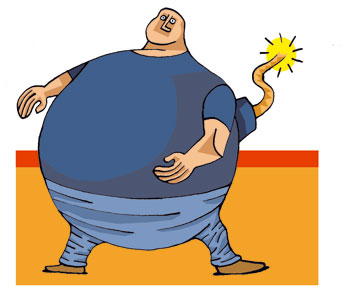
About 97 million adults in the United States are overweight or obese. Obesity and overweight substantially increase the risk of morbidity from hypertension; dyslipidemia; type 2 diabetes; coronary heart disease; stroke; gallbladder disease; osteoarthritis; sleep apnea and respiratory problems; and endometrial, breast, prostate, and colon cancers. Higher body weights are also associated with increases in all-cause mortality.
Obesity class | BMI(kg/m2) | |
Underweight | <18.5 | |
Normal | 18.5-24.9 | |
Overweight | 25.0-29.9 | |
Obesity | 1 | 30.0-34.9 |
2 | 35.0-39.9 | |
Extreme Obesity | 3 | 40 |
Medstar physician parthes (medstar family choice)


In those people whose obesity stems from compulsive eating, psychological factors seem to play a large role. Some studies suggest that obese people are much more likely than others to eat in response to stress, loneliness, or depression. As they are growing up, some people learn to associate food with love, acceptance, and a feeling of belonging.
Books
Epstein, Rachel. Eating Habits and Disorders. New York: Chelsea House Publishers, 1990.
Matthews, John R. Eating Disorders. New York: Facts On File, 1991.
Porterfield, Kay Marie. Focus on Addictions. Santa Barbara: ABC-CLIO, 1992.
Periodicals
Berry, Kevin. "Anorexia? That's a Girls' Disease." Times Educational Supplement (April 16, 1999): D8.